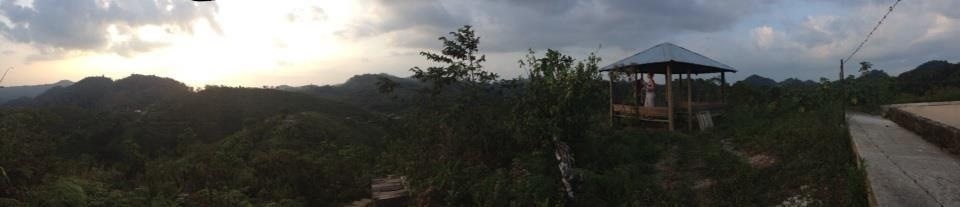
This trip has been one adventure after another. Alex and I have a lot to learn about how to live in this place. The first thing I’ve learned though, thus far, is that everyone here is willing to help.
On the plane from Miami to Managua we met a couple of friendly Catholic priests, and they were the first of helping hands. I knew they were of the Franciscan order before they took their seats on the plane, because I noticed them at the airport before boarding. One, who I would later be introduced to as Father John, had a heavy computer bag slung over his shoulder with the word ‘Franciscan’ printed in Times New Roman across one side, the capital F stretching the width of the bag. Both wore all black with white collars. Upon seeing them at the boarding gate, I had a brief flashback to my 15-year-old self on my Catholic confirmation retreat.
Just after taking my seat on the plane next to Alex one settled in on my other side while the other stuffed his ‘Franciscan’ bag at his feet across the aisle from us. Alex and I continued our conversation. After about five minutes, the man to my left broke in by asking if we were heading to Managua. In a distinct English accent he introduced himself as Father Augustine. And to answer his question we explained that no, we were actually heading to Matagalpa and continuing into the hills for an obscure organic farm called El Yunque. We explained what we do, where we’re from and how we got in touch with the farm (WWOOF.org). But with a little probing, I think it was quite plain that we only knew enough about Nicaragua to get from point A to point B as we had never traveled to the country and knew no one there minus the farm owner who we had only email contact with. Our naivety showed, but we seemed to have fallen in the right hands. Father Augustine turned to his comrade Father John, and explained the situation across the aisle. They were also heading to Matagalpa where their convento is located, and if truck space permitted, Father John offered us a ride with them instead of relying on a taxi and a bus system we had no experience with. We probably would have made it to Matagalpa without them, but it was a relief to have some English-speaking friends to welcome us to the country.
A 2-hour flight later, in Nicaragua, by the time we made it through immigration, exchanged some funds into Nicaraguan currency and retrieved our luggage the two men were standing by the exit with two more comrades and two subway sandwiches for us. After a day and a half of travel and only awkward over-priced airport food to keep our stomachs from growling, perhaps it was by some grace of God that we managed to cross paths with them.
The two men, in their collars, black pants and dress shirts, their comrades in their full habits, and all with beards smiled at us. One, wearing a habit, handed me a sandwich and said, “Thought you could use some food at the least!” Then he shook my hand and introduced himself as Friar Malachi. Father John turned to us and explained the situation, “So it turns out we do have room but you will have to sit in the bed of the truck and risk catching flies in your teeth or you can catch a bus. It’s up to you guys.”
I laughed and Alex laughed behind me. I answered for the both of us, “I think we’re fine with catching bugs in our teeth.”
So it was settled. We walked out into the dry heat (basking in it immediately) and the parking lot to find a pickup truck Toyota much like the others around it. Friar Malachi hopped in the bed and took our bags along with the two suitcases of Father John and Augustine. Friar Malachi had a distinct appearance about him that felt straight out of the bible, minus his short cropped hair. He had a small but impressive beard that hung off his chin, blue Chaco sandals peeking out from under his grey habit, an even suntan and striking blue-green eyes. Alex hopped in the back with him and would later tell me their conversation circled around love and the unquestionable existence of a God we need to thank every day.
Since “ladies don’t get bugs in their teeth,” I was given the front seat. And inside the truck’s cabin, after a brief Hail Mary led by Father John — of which he explained was always a good idea when driving a truck in Nicaragua — we got on the road. This started out the hour and a half drive to Matagalpa, a city located in north central Nicaragua. In the car I got to know the priests a little. Father John happened to actually be from Dallas, and he has done mass at my childhood church. Of the four, he has been in Matagalpa the longest at five years. The driver who I can’t recall his name but wore a notable bright red Kangol ventair and whose Brooklyn accent showed through on various words has been in Matagalpa for about five months. Father Augustine, who is from England, has also been in the country for about five months but goes between here and Honduras.
On the way out, Father John noted the dry season has really set in. And from the looks of it, it has. Though the brush was thick, every plant surrounding the road was yellow. Dust flew up with the cars and with the occasional horseback rider on the shoulder. We also witnessed two “rush hours,” one of which had us stop while cowboys herded their cows across the road. On the side of the road, also, we occasionally saw kids or old men hold up dead armadillo or little green parakeets alive but tied by their feet to stand on long twigs. The Brooklyn friar honked the horn twice short at each passing and laughed while he explained it as selling food.
As we neared the city we began to see coffee processors on either side. Father John explained that after the coffee pods are picked from the plant the beans, still in their husks, are laid outside atop a concrete slab in a thin layer to dry in the sun. After this, their husks are peeled and often used for cheap fuel in the prisons (I’m still unsure of how this particular process works), then the shells are cracked and the beans are sent to another processor to be roasted.
It was insane just absorbing all of our drive, and it took a lot out of me. I snoozed after a bit. When I woke I felt refreshed, and we were much closer to the city.
Getting into town, Father John and Augustine sighed a sound of humorous relief. “Ah, Matagalpa… It’s not the edge of the world, but it’s close enough to throw a stone at,” Father John said as though he has said it many times before. Everyone rolled their windows down. I took my cue and struggled with the manual handle that was missing half of its plastic grip. The Brooklyn friar rested his elbow on the window’s edge and said with a mock cough, “Ah, fresh air… ahem, ahem.” They laughed as we all breathed in a mixture of exhaust, dust and cool Matagalpa air and made our way through the busy street.
Five minutes later, we pulled in front of a hotel named Mana del Cielo where they said we’d find a good place to sleep since we arrived much too late to catch the only bus that goes into the hills. Then, with handshakes, a “God Bless” and simple directions to their convent and monastery if we need help at any point, we separated.
Help did not end at these four men. In fact, it continued all the way up until our final arrival on the farm.
After a comfortable night at the hotel, we got breakfast the next morning and hopped in an already half full taxi and were dropped off at the bus station, Guanaco. The station dominated one side of the street while the opposite sidewalk was lined with a bustling street market. Like garage doors, store fronts had no windows, and their contents often spilled out onto the sidewalk: machetes and agriculture or construction power tools, grains, fruit and vegetables sold in bulk, knockoff brand-name clothes, etc. The more established ‘tiendas’ had signs above the door and a security guard or young woman taking bags to store in cubby holes while shopping. Near the bus station, women with gnarly teeth and weather-beaten hands roamed the street and bus station with small snack bags of fruit, wrapped to-go meals on styrofoam plates, and plastic bags full of coconut or regular water tied off at a colorful straw poking out. They often came to a full halt in front of Alex and I and stared at us while half-heartedly holding out one of the bags. They stood like that until we shook our heads no.
We arrived at the station around noon and had about two hours until the bus for Santana would arrive. As we were advised in our correspondence with the farm owner, Santana is a small town in the hills and is the last stop on the bus’ route before we would have to get out and hike for another two hours through the hills to a village called San Antonio de Upa. Unsure, we weaved our way through the congested station. On the outer edges, I ducked my head in any door that looked official and asked in my rough Spanish where we should buy tickets for the bus to Santana. I was dismissed every time in a swirl of Spanish that I could not keep up with. We walked back to where people stood waiting in front of the lined up buses. I scanned the front windows of all of them, and saw none that said Santana in the Old English colorful fonts that marked their destinations. So we plopped our heavy backpacks on the ground and leaned up against the wall. A man standing right next to us, spoke up almost immediately in Spanish that was slow enough for me to understand and asked if we were heading to El Yunque and Don Miguel’s farm. Excited, I nodded and exclaimed, Si! He introduced himself as Juan Carlos and said that he was a close neighbor to Miguel, the farm owner. He was a thin man and about my height at 5’3, wore a tucked-in button-down shirt, a baseball cap and a thick mustache. He was about 45 I would say. He would be our second helpful run-in. When the bus arrived at 2 p.m., a white school bus with a rainbow of colors painting the trims and a luggage rack on its roof, he ran forward lugging what looked like a heavy box of purchases and a briefcase. As he ran he yelled back to us that this was it.
Meanwhile two girls also lugging backpacks similar to ours and outfitted in what I would characterize as some type of hippy traveling fashion of loose tank tops and one wearing skinny jeans with hiking boots, the other wearing a black, red and yellow thin pair of capris that cropped in gathered fabric around her knees. Realizing their odd placement amid Nicaraguans, I asked (first in English and, at their confused looks, quickly transitioning back to Spanish) if they were going to El Yunque too. Rosanna and Janina (pronounced like Yah-neena) are from Germany and, yes, they were headed to the same farm.
When Juan Carlos ran forward, Alex and I quickly grabbed our bags, I yelled to the girls to follow, and we ran to the other side of the lot where the bus was parked before it would move forward to the terminal we were previously standing at. We handed our bags off to a young man probably about my age who threw them up to another man standing on top of the bus, and we got on. Juan Carlos was sitting in the last seat in the back and waved his hands to grab my attention. He enthusiastically pointed to an empty seat in front of him for the both of us, and we sat down. At my nervous questions, he explained that the driver would come around to collect our money and give us a ticket that he would later collect from us as we get off. The girls found a place closer to the front.
We settled in for another two-hour drive full of an outstanding amount of views. This time, though, I leaned my head against the open window frame, allowed the dusty cool air to blow in my face and looked out on rising hills after hills and jungle. The road quickly turned into winding dirt paths, and the higher we got, the greener it all became.
At Santana, we got off the bus at what looked like a small community center that had sprouted up around a bus stop. A couple shacks housed corner stores that sold various snack foods and cigarettes, a shack that looked like a home, a blue outhouse and a horse post all sat on either side of the road. Juan Carlos’ sons met him at the bus and he handed off various purchases for them to carry. He asked me as I waited until our bags made it down from the bus rack if anyone was meeting us. I said no, we had to walk. He made a face suggesting he couldn’t help us with the walk. I turned back to face the bus as my bag made it to the ground, and that was the last time I saw him.
Rosanna and Janina’s bags made it down too and stacked up with ours. Janina walked up to a group of boys that were staring at us near the horse posts and asked if they knew of El Yunque, nope. The bus driver and men that helped with the ticketing and bags started discussing the farms they knew in the area. None were El Yunque. Then one asked, unsure of himself, Miguel? After a little more talk, one of them started walking down the road and said we should head the same direction. We picked up our bags and got ready to begin what we knew would be another decent-sized leg of the trip. At a fork, the man slowed down and pointed to the left and said to keep going. We walked. Twenty minutes later, while I stood adjusting my backpack, a couple women approached us each with a small boy in tow. They chuckled at the weight we were carrying and asked if we were doing alright. We told them what we were up to. They did not recognize the farm name, Miguel or anyone they knew to be a Gringo in the area. They were visiting their mothers in the next town and said that if there was a farm, it would be in the same direction they were walking. But they warned us that it would get dark soon, and we probably wouldn’t make it before then. It was dangerous, and we may get lost. We said we had no other choice. An hour later, my backpack straps cutting into my shoulders and blisters forming on my feet, our group walked on another fork in the road. The sun was low in the sky, and this was the turn where the two women said they would be separating from us, but they did not want us to walk in the night without someone who knew the road. We stood at the corner exchanging broken Spanish. We assured them we had flashlights and we wouldn’t go off the road. Then we spotted a couple of private security guards standing on the corner, both toted semi-automatic guns strapped across their chest and seemed to be guarding a private property that lay at the entrance of this village the two women were headed to.
Janina again took initiative and without saying a word to the two women, walked up to the guards and asked about the farm. “Oh, el Gringo?” I heard him ask her from my spot about 10 yards away. We broke from the women and the men started speaking to all of us to take the left fork and it was beyond this last hill. One of the guards led us to the top of the road and pointed at the hill we would be walking through. At the bottom of the road, at the fork, the other guard stood with the women. I could vaguely hear them speaking rapidly with him. A couple minutes later he came running up to catch us before we left. The two started discussing what they should do since the women insisted that someone walk with us. The former guard thought it was fine with good directions. Finally they decided that the latter would walk us the last leg. So again, we trudged forward. I took the lead next to the guard. I thanked him profusely, but I was wary of his gun. He chuckled and said they have little to do other than stand around at that corner. It was fine with him to help us. Within 20 minutes, it was pitch black as night swallowed us, I got my headlamp out to the guard’s delight, and we walked into the night. It was about another hour of walking like that, ascending the whole way.
It was signaled to us that we were making our way up a final incline when little flashlights down the road’s steep drop off blinked on and flashed at us in the dark. We were approaching life. Another turn and my headlamp shined on shacks to either side. The guard told us to wait, and he ran up to one. We heard him asking about el Gringo from our spot on the road, and a few seconds later a man came out with a flashlight. The guard said that we were to follow this man. And in English he said, “Bye bye!”
I was in awe. I felt passed around from one helping hand to another. Of course I’ve always thought I should be wary of a Central American man holding a big gun and official uniform. I thought I should be wary of all kinds of help for fear of being taken advantage of.
We walked an equivalent of a neighborhood block and entered some gates. This new guide shined his light on a cabin just on the other side of the gate and on a man sitting on the patio in the dark with his son. They spoke rapidly and again switched roles. The man on the patio grabbed a flashlight and smiled at us, then signaled for us to follow him. He led us down a cobble stone path through trees to our cabins.
After two days of solid traveling, we made it!
Alex and I walked in the first cabin where there was a small makeshift kitchen and solar panel that allowed a patio light to flicker on. We had bunk beds, and we threw our bags down relieved at the sudden release of weight. The two girls were shown to another cabin a little farther down the path.
Again, if there is anything we learned from the trek to our new home, it was that everyone is willing to help. But you have to be willing to ask.


 By Cecilia Garza
Leave a reply to Tonie Garza Cancel reply